ome |  stoe |  tore |  ontact Us |  acebook |  oogle+ |  lipboard |  interest  |  Instagram
Showing posts sorted by relevance for query tablets. Sort by date Show all posts

Monday, June 2, 2014

Top 8 affordable Quad-Core tablets compared

The defining benchmark of a Post PC era is that tablets are becoming hugely popular and are giving a stiff competition to laptops and ultrabooks. And why not? They are much more portable and offer almost all the features and capabilities one can get on a laptop. Most modern-day tablets are easily as powerful (if not more) as two-three year old laptops.

The ‘slate’ has been prevalent for quite a few years but the modern age tablet gained popularity and traction in the year 2010. In our opinion, the credit goes to Apple for shaping the tablet market when it released the first iPad in 2010 and pushed tablet segment into the mainstream consumer market. The company also brought in capacitive touchscreens to the tablet category which meant that users could just tap away with their fingers without having to rely on a stylus pen. A number of manufacturers followed Apple’s move and today every hardware-based technology company operating in the consumer space has a tablet to offer.

SAMSUNG GALAXY 10.1"

According to the International Data Corp. (IDC) the year 2013 saw a rise of 50.6% in tablet sales with the worldwide tablet shipments totalling to 217.1 million, an increase from 144.2 million in 2012. For the Indian market, researchers have predicted that the period of 2013- 2014 will see a boost of 50% in the sales on tablets. These numbers are actually huge and are a big threat for laptop makers as the tablet has been marginalizing PCs and laptops for quite some time.
A large chunk of the total number of tablets in the market is occupied by Android as it has become the dominating platform in the mobile device industry purely by number of devices adopting it. Apart from Android one can even get their hands on a Windows 8.1 running tablet under a budget of `25,000 which provides the Modern UI, as well as proper desktop mode just like a PC. Today, manufacturers like Apple and Samsung offer tablets in a premium range but a large portion of consumers in the Indian market opt for more affordable tablets to fit their budgets.

While we are on the subject, the budget category of tablets has widened a lot and with Indian brands bringing in a mix of their own products, there has been an increase in variety as well. If we look back to 2013, getting your hands on a powerful tablet meant shelling out a lot of money. But times have changed and one can easily get a tablet running on a quad-core processor with plenty of features under a budget of Rs 20,000 without breaking a sweat.
For this shootout we have picked tablets from well-known companies and also some indigenous brands which provide some competitive features. The focus here is on tablets selling around `25,000 which attracts the majority of the consumers. We have included eight Android tablets namely the Dell Venue 7 and Venue 8, iBerry Auxus CoreX8, iBall Slide 3G Q1035, Micromax Canvas Tab, Google Nexus 7 (2013), MTV Slash 4X and Simmtronics XPad Turbo. We have also included two Windows 8.1 tablets one from Dell and one from Acer.

THE PLATFORMS

Android had stepped into the tablet game by releasing a different version altogether (3.0 Honeycomb) which was specifically designed for tablets. It did not gain a lot of popularity back then, so Google scrapped it off and made a unified version (4.0 Ice Cream Sandwich) that would run both on smartphones and tablets. Today the platform is on the verge of becoming the most selling tablet operating system and the numbers are just going stronger by the day. Almost all of the Android tablets that we have tested run on Android 4.2 and the only tablet with the latest KitKat update was the Nexus 7.
Hopefully manufacturers will be announcing some new tablet this year with Google’s latest 4.4.2 update. With almost 2 million apps available on the Google Play store, Android tablets are poised to take over the industry. When Microsoft had announced that Windows 8 will feature an app ecosystem on top of the traditional desktop layout, it seemed logical that the OS would be ported to tablet devices. The good part is that one can get a full-fledged desktop/laptop experience but the bad part is that using its touchscreen on the desktop mode is a real pain. The tiled UI is similar to what we have seen on Windows Phone devices and the apps work in a similar fashion. With the app development steadily going stronger, Windows 8.1 tablets could soon gain a decent market share.

Wednesday, May 28, 2014

HP Omni 10 review: A tablet for working men

Over four years after Apple introduced iPad - and dazzled the world - tablets remain a work in the progress. iPad is more or less amazing at what it does. But at the same time, it is a device that has limited appeal, especially in the developing countries where people don't want to carry more than one or two devices at a time, because of what it can't do. For most people it doesn't replace a laptop. People who carry an iPad also carry a laptop with them. Usually.

Microsoft, which realised the disrupting power of tablets late, understands this. Windows 8, launched in 2012, was an attempt to combine the power of PC into the convenience and appeal of a tablet. It didn't succeed. But Microsoft and its hardware partners haven't given up. The company has worked on improving Windows 8 while its partners have polished the hardware that is supposed to replace the tablet-laptop combo with one device.
Omni 10, a tablet by HP, is one such device. Powered by Windows 8.1 (upgradable to Windows 8.1 Update 1 for free), Omni 10 promises consumers full Windows functionality in a form factor that offers the ease and convenience of a tablet. Does it succeed? Let's find out...

Build quality, screen and camera
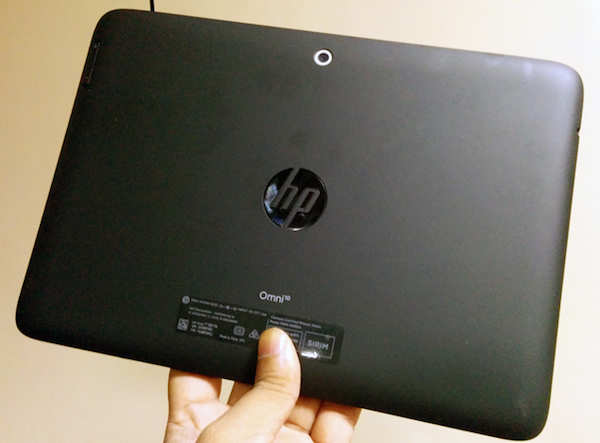
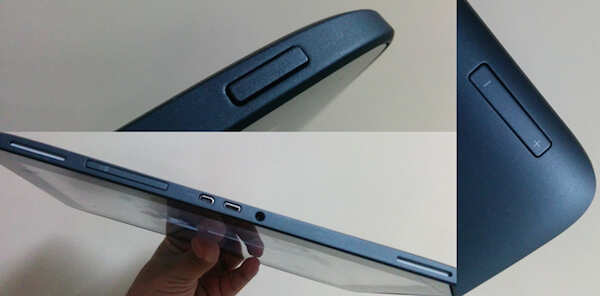
Compared to some other Windows tablets - Microsoft Surface is one example - Omni 10 is a budget device. But HP has managed to strike a good balance between keeping the price low and opting for premium build material. The shell of Omni 10 is made of plastic that has soft rubber coating. The tablet has a tried-and-tested rectangular design with rounded edges, which makes it easy to hold. The whole design is very minimalistic. On the back, there is a shiny engraved HP logo and a small camera slot. On the left, there is a 3.5mm jack for headphones. On the right, there is a volume rocker that sits flushed with shell of the tablet. This too adds to the minimalist design.


The power button is on the top right. The tablet has stereo speakers, which are very loud for their size but the quality of sound is nothing special. The speaker grills are on the bottom side along with a micro HDMI port, a micro USB port and a covered micro SD card slot.
The ports and buttons are well disguised and that gives the tablet a design that looks clean and seamless.

Omni 10 has a 10-inch screen, covered by tough (Gorilla Glass 3) glass. The screen has a resolution of 1200 X 1980 pixels. It is not among the best screens we have seen in a tablet but it gets the job done. Colours look punchy on Omni 10 and contrast is good. The brightness is on the lower side, but is adequate unless you are standing under the sun.

Compared to the screen in iPad Air, Omni 10 doesn't look that good. The iPad screen is sharper, has better viewing angles and shows punchier colours. But compared to screens that you will get in a similarly priced laptop or a Windows tablet, HP Omni 10 does a very good job. The Omni 10 screen won't dazzle you but whether you are browsing the photos you snapped during your latest holidays or reading a book on it, it will look pleasant to you.


The tablet has two cameras. Both are passable. The 8MP primary camera shoots images that lack contrast. Though the level of detail it captures is decent and focus is usually sharp. If you are using Omni 10 for taking photos - we don't recommend it because it is a large tablet and it is little awkward to hold it as a camera - you can click images that are fit to be shared on social media. But just don't expect it to match the images that similarly-priced smartphones can click.

The 2MP camera on the front captures noisy footage, especially indoors where it is likely to be used. But it offers enough clarity to hold video chats.

While it is mostly a good show from HP in Omni 10, we have one complaint: The capacitive home button under the screen is not sensitive to touch. There were instances when we had to tap on it twice or thrice before it registered the touch.


Overall, we like the design and build quality of Omni 10. The quality of plastic used to build the shell of tablet and the use of Gorilla Glass give it a solid feel. Finishing is top notch, buttons don't wobble and due to the rounded edges it is easy to carry and use Omni 10.

Software and performance
Omni 10 runs the full and fat version of Windows. It uses Windows 8.1 and not the Windows RT that some other tablets use. In terms of hardware requirements, the full version of Windows is more demanding than the iOS that powers iPad or Android.
Omni 10 is powered by Intel Atom Z3770 quad-core processor running at 1.46GHz. It uses 2GB DDR3 RAM and 32GB Samsung hard drive - of which around 10GB is available to users.

Atom Z3770 is top of the line processor. In a tablet like Omni 10, it is a necessity too. For most part, Omni 10 offers performance that is very good. A user gets the full Windows experience optimized for touch and with Omni 10 you can do almost everything that you can do on a laptop.

Earlier Windows tablets suffered due to performance issues but Z3770 offers enough speed and power to make the experience better on Omni 10. Web browsing is smooth on Omni 10. And so is working on Word or PowerPoint documents. Demanding games like Asphalt 8 can be played but the gameplay is not entirely smooth and there is a hint of lag.

The biggest strength of Omni 10 is that it runs the full version of Windows. This means you get access to the "desktop" mode as well as the Modern UI mode. This also means that you can install almost any Windows application on it.

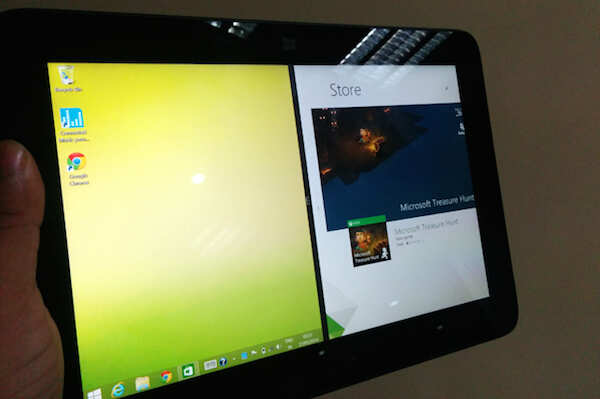
In terms of user interface, Windows 8.1 one big advantage over iPad or Android tablets: Full multi-tasking. If you use Omni 10 in desktop mode, you can enjoy the same multitasking that you get on a laptop or computer. Even in modern UI mode, you can snap two applications side by side - the windows are resizable - and work on both of them simultaneously.


But the biggest disadvantage of Omni 10 is also Windows. It is not as elegant or easy to use as an iPad or an Android tablet. If you are familiar with computers and like working on them, you will feel comfortable with Omni 10. But it will not delight you the way an iPad does.

Omni 10 can run almost any Windows app. But the good Windows apps that are optimized for Windows 8.1 and are available through the Windows App store are still not as abundant as iPad specific apps or Android apps. If you are using an iPad or an Android tablet, you will have access to higher quality games and better looking apps compared to what you will get with Omni 10.

In the past, battery life has been an issue with Windows tablets. Omni 10 fares better. It still doesn't offer 15 hours of battery life that the latest iPads or some Android tablets can manage but depending on your use, it is easy to get battery life of around 10 to 11 hours from the device. The fact that Omni 10 is a Wi-Fi only device (it doesn't support cellular connectivity) also helps.

Should you buy it over iPad?
In general, Windows tablets are still not at a stage where we can recommend them over iPad or a good Android tablet. But there are some specific exceptions.

If you are looking to get a Rs 30,000 tablet to browse the web and social media sites, use apps like Gmail, watch movies an play games, we still recommend iPad. But if you want a good portable device that can run some specific Windows apps that you use at work, or offer you a fully-functional file system, Omni 10 is a good option. It is not as good as Surface Pro but then it also costs almost half of what Surface Pro would cost if Microsoft launches it in India.

In a way, with a price of Rs 29,990 Omni 10 is a poor man's Surface Pro. It is fast enough and good enough to be recommended over a Rs 30,000 laptop if you are looking for a portable Windows device. Buy it if you REQUIRE a Windows tablet. Don't buy it if you just want a tablet because in that case iPad Mini/iPad Air or a device like Nexus 7 is a better option.

Thursday, July 10, 2014

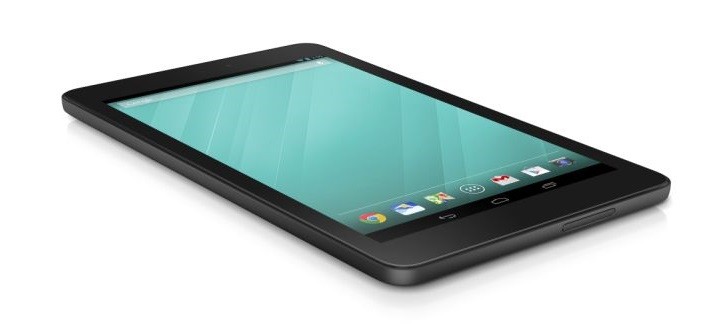
New Dell Venue 7 and 8 with Intel Merrifield Available in the US, Starting at $160 / €116

Earlier this month, the new Dell Venue 7 and 8 tablets were spotted making a stop at the FCC, so it was pretty clear to us they were going to be making it into retail soon enough.

Well, this day has come and now 
Dell has announced both slates have been made available in the US. The original Venue tablets were introduced back in 2013 and now Dell is taking an opportunity to refresh the lineup by bumping their speech sheet a little bit.

First off, the two tablets now enjoy the services of the Intel Merrifield platform. The 8-inch model delivers FHD resolution (1920 x 1200 pixels) while relying on a 2.1GHz Intel Atom CPU Z3480. The tablets are fitted with 1GB of RAM and 16GB of internal storage (expandable via microSD card).

The 7-incher doesn’t offer the same advanced resolution, limiting itself to bringing just 1280 x 800 res to the tablet. The CPU under the hood is an Intel Atom Z3460. Both slates run Android 4.4 KitKat out of the box, so you won’t have to wait for any soft updates if you purchase this bunch.

The 7-inch will take you back with $159 / €116, while the 8-incher will sell for $199 / €146. You can pick up both from the 
Dellwebsite.

Wednesday, August 20, 2014

Galaxy Tab 4 Nook

Back in June Barnes & Noble announced that it would launch a co-branded Samsung tablet that would marry Samsung's hardware with its Nook software. Well, that tablet, the Samsung Galaxy Tab 4 Nook, is now shipping, and it's exactly what what we imagined it would be.

Indeed, the Galaxy Tab 4 Nook hardware is identical to the existing 7-inch Galaxy Tab 4, which lists for $199 (but is widely available for $20 less). In fact, there's not even any Barnes & Noble branding on the device, only on the box. The Nook version comes in white or black and is being offered for $179 after a $20 instant rebate in Barnes & Noble's online and brick-and-mortar stores. At launch you also get what B&N says is $200 worth of free content, including three e-books, three TV episodes, a $5 Nook store credit for apps or movies, and some special offers for digital magazines.The Galaxy Tab 4 7-inch is Samsung's entry-level tablet, but it's nicely designed and Barnes & Noble says it's its thinnest Nook tablet offering yet, measuring 0.35 inches thick and weighing 9.74 ounces. It runs on a quad-core processor and has 8GB of built-in memory -- about 5GB of that is usable -- but its micro-SD expansion slot means you can add storage on the cheap (a 32GB card costs less than $20). Resolution is 1280 x 768, which is fine but actually a step below the resolution of Barnes & Noble's last 7-inch model, the 2012 Nook HD tablet, which came in at 1,440x900.
mainly aiming on book worms

Galaxy Tab 4 Nook's user interface is where it departs from the stock Galaxy Tab 4. Instead, you get the Barnes & Noble skin that's similar to that of previous Nook tablets. The idea here is that this remains a "reading" tablet, with your e-books and Barnes & Noble's book recommendations and deals featured on the device's home screen. You have quick access to your library, the last book you were reading and needless to say, Barnes & Noble's e-book and app stores. As before, you can also set-up password-protected user profiles, so members of your family can have their own personalized content lockers.
We'll have a full review of the device in the coming days, but here's my gut reaction to this initial Samsung Nook product and the partnership in general:

Barnes & Noble needed a new Nook to show its customers that it's still committed to the brand after a very rough 2013. While it's agreed to buy 1 million Galaxy Tab 4s from Samsung over the next 15 months, that's a lot less risky and affordable proposition than making its own hardware.
The Galaxy Tab 4 isn't the most exciting tablet -- not too many tablets are these days -- but it's got an attractive enough design and is reasonably zippy. It also helps that the Samsung brand is quite powerful and feels like a safer investment compared to the Nook brand.
I think the 8GB of built-in memory is skimpy (16GB would have been better) and would suggest you invest in a 32GB memory card to up the memory total to 40GB. But the fact that this is an open device (you can access the Google Play store) and has that memory-card slot are nice pluses. Amazon's, Apple's, and Google's tablets do not have a memory expansion options.

Sunday, September 7, 2014

What to expect at Apple's Sepember 9 event

Apple's mystery unveiling on Tuesday is expected to be a watershed moment for the California giant - and the entire tech industry. Here are key things to watch for:

9 SEPTEMBER'S  APPLE EVENT CAN BRING MAJOR CHANGES IN TECH WORLD

1.Can Tim Cook step up?
Chief executive Tim Cook will seek to vanquish the notion that Apple lost its magic when its famed co-founder Steve Jobs died.
Cook could help APPLE establish its dominance in a new category with an "iWatch" at the event set in the very location where Jobs introduced the Macintosh computer 30 years ago.
Since Jobs died in late 2011, pressure has been on his successor Cook to show the world that Apple can shine just as brightly without the iconic pitchman known for perfection in design and mastery in marketing.
Apple lovers have been eager for the company to seize a new gadget category the way it dominated smartphones, tablets, and MP3 players with the iPhone, iPad, and iPod respectively.
"I don't believe this project is a knee-jerk reaction to other smartwatches," said Creative Strategies president Tim Bajarin.
"While the roots go back to Steve Jobs, this product is Tim Cook and Jony Ive."
The genesis of what is being referred to in the media as "iWatch" stemmed from Jobs and his frustration with health care matters while battling illness that took his life, according to the analyst.
Bajarin spoke of sources telling him the Apple wearable computer has been in the works for seven years.
Cook would fittingly be putting his stamp on the first "next big thing" launched by Apple without Jobs. While an iWatch will wirelessly tap into capabilities of iPhones or iPads, managing health is expected to be a strong theme.
Bolstering that likelihood is Cook's reputation as a fitness fanatic who was among the early users of Nike Fuel activity tracking wristbands.
2.Can Apple shake off security fears?
Another thing to watch for will be how Apple addresses the elephant in the room - security of photos, videos and other data stored on devices or online in servers at iCloud or iTunes.
Cook told The Wall Street Journal this week that Apple is stepping up its iCloud security by sending people alerts when attempts are made to change passwords, restore iCloud data to new devices, or when someone logs in from a new gadget.
His comments came after Apple took a bruising over a "targeted attack" that led to the release of nude photos of celebrities including Oscar winner Jennifer Lawrence.
Apple has insisted there was no breach of its cloud storage system and that the celebrities had their accounts hacked by using easy-to-guess passwords, or by giving up their personal data to clever cybercriminals.
Security could play into the off-chance that Apple will announce iPad enhancements such as adding fingerprint scanning, in a break from its practice of keeping smartphone and tablet events separate.
3.How big will the iPhone go?
While the unveiling of new-generation iPhones with larger screens is considered a sure bet, people will be watching to see how big Apple will go and when models will make it to market.
Apple has remained consistently tight-lipped, but analysts are expecting the iPhone screen to be boosted to at least 4.7 inches, and a 5.5-inch screen is also likely, allowing Apple to compete in the new "phablet" segment.
4.A payments company?
Watch also to see how aggressively Apple moves into mobile money with near-field-communication chips built into iPhone 6 models letting them be used as Internet age wallets.
There are reported to be 800 million accounts at Apple's online iTunes shop, where people's credit card data could be easily synched to mobile wallets, quickly creating a vast sea of users.
With this, Apple could jump-start the effort to use mobile devices for payments.
5.What else is coming?
Some reports speculate that Apple may also unveil an upgrade to its iPad Air, which would be a departure from its tradition of a separate announcement for tablets.
The new mobile platform iOS 8 will have capabilities that go beyond health and payments, say some analysts. This could involve smart-home technology or other systems that put Apple at the center of the ecosystem.
"Ultimately, we believe the pivot toward software and services and the rise of a more comprehensive enterprise strategy could help Apple become much more than just a hardware company," said Barclays analyst Ben Reitzes.

Saturday, May 3, 2014

Windows 8.2 Is Coming: Build Number 6.3.9740.0 Spotted Online


The next version of Windows 8.1 will bring back the Start menuEnlarge picture - The next version of Windows 8.1 will bring back the Start menu
We already know that Microsoft is planning to release a second Windows 8.1 update sometime this year, so it's no surprise that the first signs of a new Windows are now starting to show up online.

A new report coming from Twitter user AngelWZR via Neowinreveals that Windows build number 6.3.9740.0 has recently been compiled and Microsoft decided to take it for a spin online, thus trying to see if everything works as it should.

Of course, there are absolutely no details available right now, but according to some previous rumors, the future Windows update could bring some pretty major changes to the modern platform.

At this point, it's not yet clear whether Microsoft is planning to call the upcoming update Windows 8.2 or use a different designation, but the company has already confirmed at the BUILD 2014 developer conference in San Francisco this April that a Start menu and options to run Metro apps in dedicated windows are very likely to be part of the feature lineup.

The Start menu comeback is not seen as a way to fix Windows 8, but rather as a method to improve its usability on the desktop computer, Microsoft said, as it wants all users out there to make the most of the modern operating system no matter what device they currently own.

The Start menu will only be available on PCs where such a feature would actually make sense, while tablets, such as its own Surface RT and Surface 2, which mostly use the Modern UI, will stick to the existing configuration without a menu.

Options to run Metro apps in separate windows would basically mix the Modern UI and the desktop and thus make Windows Store apps a bit more useful even if you're not going to the Start screen too often. The first step has already been made in Windows 8.1 Update when the company introduced dedicated tools to pin Metro apps to the taskbar and thus allow users to launch them without accessing the Start screen.

The same OS update also brought a title bar and close and minimize buttons for Metro apps, giving users more control over the programs they launch without the need for a touch capable device.

Windows build number 6.3.9740.0 is very likely to be spotted online in the coming weeks as well and given the fact that it's way too early to discuss a preview build of Windows 9, it's safe to assume that this is indeed the OS update coming in mid-2014.
SOURCE:- SOFTPEDIA

Friday, September 5, 2014

Sennheiser's momentous

Family-run German company Sennheiser has won rave reviews for headphones like the Momentum On-Ears. Among music fans, however, they're not as well known as Beats, the rival company co-founded by rapper Dr Dre, adored by celebrities, and this year snapped up by Apple in a multimillion-dollar deal. By adding Momentum quality to in-ear headphones suitable for listening when you're out of the house, Sennheiser wants to change that.

The Momentum In-Ear headphones will cost £90 in the UK and $99 in the US, with Australian pricing yet to be announced (the US price converts to AU$106). There are two versions: one for Android or Windows smartphones and tablets, on sale in September, and one for Apple iOS devices hitting shops before the end of the year.
Of course, when any successful brand is translated to a new form, it remains to be seen -- or rather, heard -- whether they deserve the name or if it's just a shameful attempt to cash in on the cachet of the higher-end models. But for the new in-ear models, Sennheiser trumpets newly developed transducer technology, a stainless steel acoustic pipe and high-quality dynamic speaker system that it says gives a powerful bass response and detailed vocal projection.
Sennheiser has also introduced a new range of on-ear headphones this week, called Urbanite. The headphones will arrive in September, costing £150 and £200 from John Lewis in the UK, and $199 or $249 in the US, with Australian prices yet to be announced (the US price converts to around AU$215 or AU$265).

Monday, June 2, 2014

10 Upcoming Technology That May Change The World

We have seen great leaps in digital technology in past the past five years. Smartphones, cloud computing, multi-touch tablets, these are all innovations that revolutionized the way we live and work. However, believe it or not, we are just getting started. Technology will get even better. In the future, we could live like how people in science fiction movies did.
revolutionary product
(Image Source: YouTube)
Today’s post is about 10 upcoming, real-life products that is set to revolutionize the world as we know it. Get ready to control the desktop and slice Ninja fruits with your eyes. Get ready to print your own creative physical product. Get ready to dive into the virtual world, and interact with them. Come unfold the future with us.

1. Google Glass

Augmented Reality has already gotten into our life in the forms of simulated experiment and education app, but Google is taking it several steps higher with Google Glass. Theoretically, with Google Glass, you are able to view social media feeds, text, Google Maps, as well as navigate with GPS and take photos. You will also get the latest updates while you are on the ground.
google glass
(Image Source: YouTube)
It’s truly what we called vision, and it’s absolutely possible given the fact that the Google’s co-founder, Sergey Brin has demo’ed the glass with skydivers and creatives. Currently the device is only available to some developers with the price tag of $1500, but expect other tech companies trying it out and building an affordable consumer version.

2. Form 1

Just as the term suggests, 3D printing is the technology that could forge your digital design into a solid real-life product. It’s nothing new for the advanced mechanical industry, but a personal 3D printer is definitely a revolutionary idea.
Everybody can create their own physical product based on their custom design, and no approval needed from any giant manufacturer! Even the James Bond’s Aston Martin which was crashed in the movie was a 3D printed product!
form 1
(Image Source: Kickstarter)
Form 1 is one such personal 3D printer which can be yours at just $2799. It may sound like a high price but to have the luxury of getting producing your own prototypes, that’s a reaonable price.
Imagine a future where every individual professional has the capability to mass produce their own creative physical products without limitation. This is the future where personal productivity and creativity are maximized.

3. Oculus Rift

Virtual Reality gaming is here in the form of Oculus Rift. This history-defining 3D headset lets you mentally feel that you are actually inside a video game. In the Rift’s virtual world, you could turn your head around with ultra-low latency to view the world in high resolution display.
There are premium products in the market that can do the same, but Rift wants you to enjoy the experience at only $300, and the package even comes as a development kit. This is the beginning of the revolution for next-generation gaming.
oculus rift
(Image Source: Kickstarter)
The timing is perfect as the world is currently bombarded with the virtual reality topic that could also be attributed to Sword Art Online, the anime series featuring the characters playing games in an entirely virtual world. While we’re getting there, it could take a few more years to reach that level of realism. Oculus Rift is our first step.

4. Leap Motion

Multi-touch desktop is a (miserably) failed product due to the fact that hands could get very tired with prolonged use, but Leap Motion wants to challenge this dark area again with a more advanced idea. It lets you control the desktop with fingers, but without touching the screen.
leap motion
(Image Source: Leap Motion)
It’s not your typical motion sensor, as Leap Motion allows you to scroll the web page, zoom in the map and photos, sign documentss and even play a first person shooter game with only hand and finger movements. The smooth reaction is the most crucial key point here. More importantly, you can own this future with just $70, a price of a premium PS3 game title!
If this device could completely work with Oculus Rift to simulate a real-time gaming experience, gaming is going to get a major make-over.

5. Eye Tribe

Eye tracking has been actively discussed by technology enthusiasts throughout these years, but it’s really challenging to implement. But Eye Tribe actually did this. They successfully created the technology to allow you to control your tablet, play flight simulator, and even slice fruits in Fruit Ninja only with your eye movements.
eye tribe
(Image Source: Eye Tribe)
It’s basically taking the common eye-tracking technology and combining it with a front-facing camera plus some serious computer-vision algorithm, and voila, fruit slicing done with the eyes! A live demo was done in LeWeb this year and we may actually be able to see it in in action in mobile devices in 2013.
Currently the company is still seeking partnership to bring this sci-fi tech into the consumer market but you and I know that this product is simply too awesome to fail.

6. SmartThings

The current problem that most devices have is that they function as a standalone being, and it require effort for tech competitors to actually partner with each other and build products that can truly connect with each other. SmartThings is here to make your every device, digital or non-digital, connect together and benefit you.
smartthings
(Image Source: Kickstarter)
With SmartThings you can get your smoke alarms, humidity, pressure and vibration sensors to detect changes in your house and alert you through your smartphone! Imagine the possibilities with this.
You could track who’s been inside your house, turn on the lights while you’re entering a room, shut windows and doors when you leave the house, all with the help of something that only costs $500! Feel like a tech lord in your castle with this marvel.

7. Firefox OS

iOS and Android are great, but they each have their own rules and policies that certainly inhibit the creative efforts of developers. Mozilla has since decided to build a new mobile operating system from scratch, one that will focus on true openness, freedom and user choice. It’s Firefox OS.

Wednesday, June 4, 2014

Microsoft Office for Windows 8 Delayed, Could Launch with Windows 9 – Report


We already know that Microsoft is working on a touch-optimized version of Office that would be specifically aimed at the Modern environment included in Windows 8, but there are still no details as to when this new build of the productivity suite could reach the market.

The software giant has already teased the new version with several occasions, including at BUILDDescription: http://images.intellitxt.com/ast/adTypes/icon1.png 2014 in San Francisco when it presented the touch-optimized PowerPoint in action, and hinted that the public launch could take place as soon as this year.

But according to Microsoft watcher Mary Jo Foley, Office Touch is very likely to be delayed as the companyDescription: http://images.intellitxt.com/ast/adTypes/icon1.png is now working to bring the Android SKU to the marketDescription: http://images.intellitxt.com/ast/adTypes/icon1.png before the one aimed at Windows 8.

The reason is pretty much the same as for Office for iPad. Asked why the company intends to launch the iPad version before the Windows 8 one, Microsoft's new CEO Satya Nadella explained at the Code Conference last month that it's all because of the market share.

There are millions of iPad users out there, so the company needs to expand its productivity suite in such a way that it would be capable of reaching a wider audienceDescription: http://images.intellitxt.com/ast/adTypes/icon1.png. Both the iPad and Android are part of this project, while Windows 8 clearly comes in third place.

“The intent here is to make sure our services are available on all devices. There are going to be Windows devices and there are going to be other devices and we have to make sure our services run on all of them,” Satya explained at the Code Conference.

“That said, iPad has the most share. We are definitely going to have touch-first Office on Windows, and it is coming.”

As for the release date of the touch-based Office for Windows, nothing is sure so far, but the same report hints that Microsoft might launch it in spring 2015. Unsurprisingly, the same timing is believed to be prepared for Windows 9 as well, Microsoft's next full Windows operating system which could see daylight in April 2015.

In other words, Microsoft might launch Windows 9 and Office Touch at the same time, a plan that would actually make sense given the fact that people close to the matter suggested that Microsoft was planningDescription: http://images.intellitxt.com/ast/adTypes/icon1.png to remove the desktop in a future Windows 9 SKU. As a result, Office Touch would give users the chance to create and edit documents on their tabletsDescription: http://images.intellitxt.com/ast/adTypes/icon1.png even without a desktop.

Saturday, August 30, 2014

Alienware Area 51

dell Alienware gaming brand is reviving one of its classic desktop lines, with the new Area 51. While it shares a name with the big, boxy, desktop gaming systems of old, this version has an entirely new look and feel, and includes a just-announced high-end processor and chipset from Intel.
for the first time alienware come in spaceship shape

The system is built around Intel's new Haswell-E CPU, a late entry to the Haswell generation of CPUs designed to give that fourth-gen Core i-series technology a final boost for enthusiast PC gamers. Intel'sBroadwell generation of Core i CPUs won't be around until next year, and the new Core M family is aimed squarely at tablets, hybrids, and ultrabooks, so for now, this is likely to be the marquee processor for gaming desktops. It comes paired with a new motherboard chipset, called X99, that promises to support DDR4 RAM.
This new version has a unique three-sided design, which Alienware calls "triad." The flat corners of the triad shape allow you to rock the massive chassis back easily and access ports or doors with only one hand. You can also grip two of the handle-like points of the triangle to lift or move the system, which will weigh roughly 45 pounds.
Both side panels are removable, offering access to the motherboard, video card slots, and hard drive trays. The Area 51 supports up to three full-width GPUs (both Nvidia and AMD options will be available), up to five hard drives, and the system is designed to support a 1.5K watt power supply. Running hardware like that can generate a lot of heat, so Alienware says the angled design can allow you to push the chassis up against the wall while still allowing hot air to escape.Like just about every Alienware laptop or desktop, there is an entire user-controlled light show built in, with nine separate zones, all controlled by the company's AlienFX software.
In our brief eyes-on time with the system, it at least looked different and more sculpted than other gaming desktops, although the traditional market for these systems has been at least partially eroded by better gaming laptops, next-gen living room gaming consoles, and new devices such as Alienware's own Alpha, a small form factor gaming desktop designed for living room use.
Dell says the Area 51 will start shipping in October in the US, and later in the Holiday season globally. The starting price has not been announced, but we expect it to cost a lot.